Public health, explained: Sign up to receive Healthbeat’s free Atlanta newsletter here.
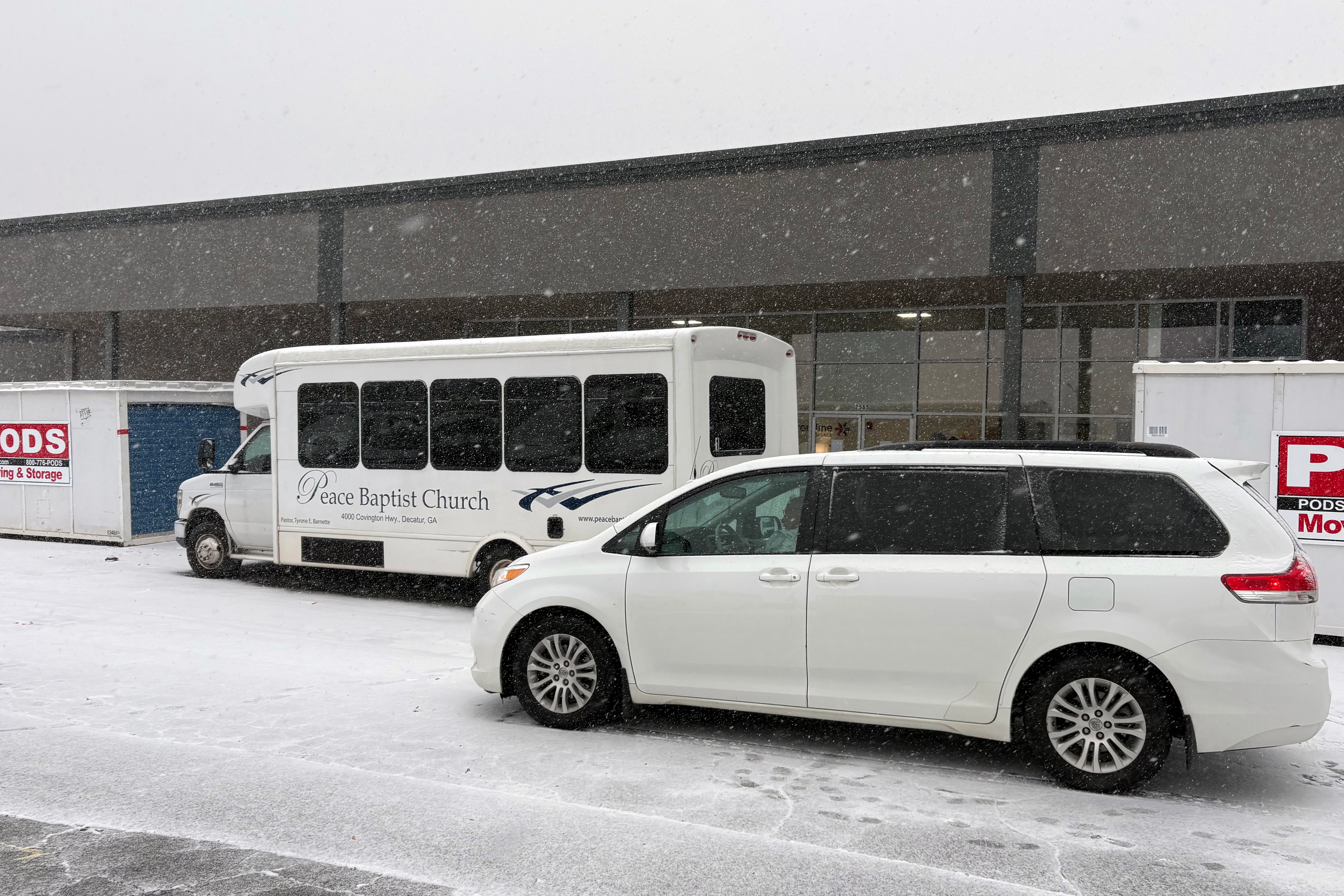
As metro Atlantans have braced their way through teeth-chattering weather this week, some of the area’s efforts to keep unhoused residents out of the freezing cold have exceeded their expected capacity.
Warming centers are an essential way to keep Atlantans without homes out of dangerously cold weather, said Will Smith, director of the Exchange Recreation Center near Decatur. Earlier this week, Georgia Gov. Brian Kemp ordered a winter storm state of emergency, and the Georgia Emergency Management and Homeland Security Agency, GEMA, reported a hypothermia-related death caused by the state’s freezing temperature.
DeKalb County has used Smith’s center as an overnight warming center throughout the winter and added a 24-hour option last week. Like other centers throughout the state, it offers hot meals throughout the day.
“I think we’ve done everything humanly possible to provide for our unhoused residents here in DeKalb County,” Smith said.
At times, that’s been a challenge. Earlier in the winter, he estimated that the Exchange could shelter up to 60 people. But on Wednesday afternoon, a day Atlanta saw a low of 12 degrees Fahrenheit, he said the center was hosting 97 residents.
“People were just coming in late at night,” he said. “At 1 or 2 o’clock in the morning, if it’s 20 degrees outside, of course we’re going to let you in and try to service you.”
That increased capacity has made it difficult for Exchange staff to make everyone comfortable, Smith said. While the Red Cross and DeKalb Emergency Management Agency gave Exchange additional cots for people to sleep on, it’s been hard for employees working around the clock to address everyone’s needs.
He said Exchange could accommodate more people, but getting more beds, blankets, and food could be difficult.
“It’s not that we don’t want to take them,” Smith said. “But we want to service them to the best of our ability.”
The city of Atlanta opened a fourth warming center after three others reached capacity earlier this week.
“No one was turned away,” said Michael Smith, press secretary for the mayor’s office. “The very reason the fourth location was activated was to make sure everybody can be accommodated.”
Atlanta is planning to keep the warming centers open overnight through at least Sunday morning, when temperatures are expected to rise.
Even with the additional space, the centers have been crowded this week. On Wednesday, Christopher Pough, who’s been living on the Atlanta streets, said he had stayed at the Central Park Recreation Center gymnasium for three days. While the warming shelter was set to accommodate 75 people, he estimated there were twice as many people staying there by mid-week.
“We’re really right next to each other like sardines,” he said. “It’s hard to move around.”
Other social service providers have also faced capacity challenges keeping people warm through a frigid week.
Keisha Zimmerman, executive director of Calvary Refuge Center in Forest Park, said her homeless shelter has 59 beds where people can stay up to 21 nights. Throughout these cold weeks, the shelter has been at full capacity and having to refer people to other nearby warming centers.
“We can’t have people sleeping on the floor or in the hallways or in a chair in the dining hall,” she said.
While there are some warming centers in Clayton County, Zimmerman said they fill up quickly. Often, she has to refer people seeking shelter to options in Atlanta.
She wishes there were more ways to stay warm off the streets south of Interstate 20.
“There is a need for more warming stations in our area,” she said.
An updated list of open warming centers can be found at GEMA’s website.
Allen Siegler is a reporter covering public health in Atlanta for Healthbeat. Contact Allen at asiegler@healthbeat.org.