Public health, explained: Sign up to receive Healthbeat’s free New York City newsletter here.
New York City officials on Tuesday released a comprehensive plan to address chronic and diet-related diseases, which are among city residents’ leading causes of death.
The city’s plan, laid out in a new report, Addressing Unacceptable Inequities: A Chronic Disease Strategy for New York City, details a cross-agency approach to confront heart disease, diabetes, and screenable cancers through 19 proposals. The strategy aims to address existing diseases and their root causes, including by providing direct assistance, promoting healthy lifestyles, and tackling the commercial systems that drive chronic disease.
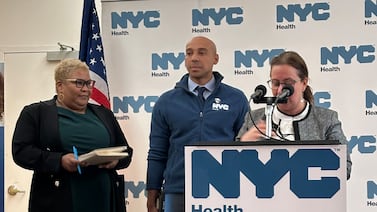
“Chronic diseases are the number one killer of New Yorkers, and as city government, we have a responsibility to really address it,” Dr. Michelle Morse, acting commissioner of the Department of Health and Mental Hygiene, said in an interview.
In New York, chronic and diet-related diseases — which include heart disease, stroke, diabetes, and some cancers — are leading causes of death across all racial and ethnic groups, but disproportionately impact Black New Yorkers, according to the Health Department. The other drivers of premature death in the city include drug overdose, suicide, homicide, and Covid-19.
By 2030, the city aims to reduce deaths due to screenable cancers by 20%, and those due to cardiovascular and diabetes-related disease by 5%. Those goals are part of HealthyNYC, a campaign to extend New Yorkers’ lives that launched in 2022, following a sharp decline in life expectancy due to the Covid-19 pandemic. In one year, New Yorkers’ life expectancy fell to 78 years in 2020, from 82.6 years in 2019. By 2022, life expectancy had climbed back up to 81.5 years. The city aims to exceed 83 years of life expectancy by 2030.
Most chronic diseases are caused by just a few risk factors, including tobacco consumption, poor nutrition, physical inactivity, and excessive alcohol use, according to the U.S. Centers for Disease Control and Prevention. The city’s report, citing the Health Department’s 2022 and 2023 community health surveys, said only 6% of adult New Yorkers eat the recommended five servings of fruit and vegetables each day, 8% smoke, 26% binge drink alcohol, and about 30% get no physical activity.
The city’s plan includes a broad array of proposals that aim to chip away at persistent chronic and diet-related disease mortality. One proposed program, “More Veggies,” would provide 250 patients from a federally qualified health center in the Bronx with debit cards for monthly purchases of produce. The participants — Medicaid recipients who are food insecure and with poorly controlled type 2 diabetes — would also receive case management assistance.
Another proposal would explore limiting the promotion of sugary drinks on Metropolitan Transportation Authority property, as part of the city’s work to reduce the consumption of harmful products including tobacco, alcohol, and sugary food and beverages.
New York City also aims to promote healthy lifestyles, including by investing in public spaces, encouraging participation in activities at city parks, and expanding the presence of community health workers at public housing developments.
Some of the city’s proposals draw on existing funding, while others would depend on securing additional resources. Amid uncertainty about the impact of the Trump administration’s dramatic changes to the federal government on states and municipalities, Morse said that she collaborates closely with the state health department and will advocate for the city’s chronic disease initiatives to receive necessary resources.
This work is personal, Morse said: Her father had a below-the-knee amputation from diabetes at the age of 59.
“I hope that no New Yorker has to suffer from that in the future,” she said. “It’s completely preventable.”
Eliza Fawcett is a reporter covering public health in New York City for Healthbeat. Contact Eliza at efawcett@healthbeat.org .